

SHE HAS RISEN
A short essay for this Easter Sunday

Welcome back to SHOUTY SUNDAY, where we say the quiet parts LOUD and remember what was here before the rebranding.
Hello Dear Readers en fijne Pasdagen 🐣
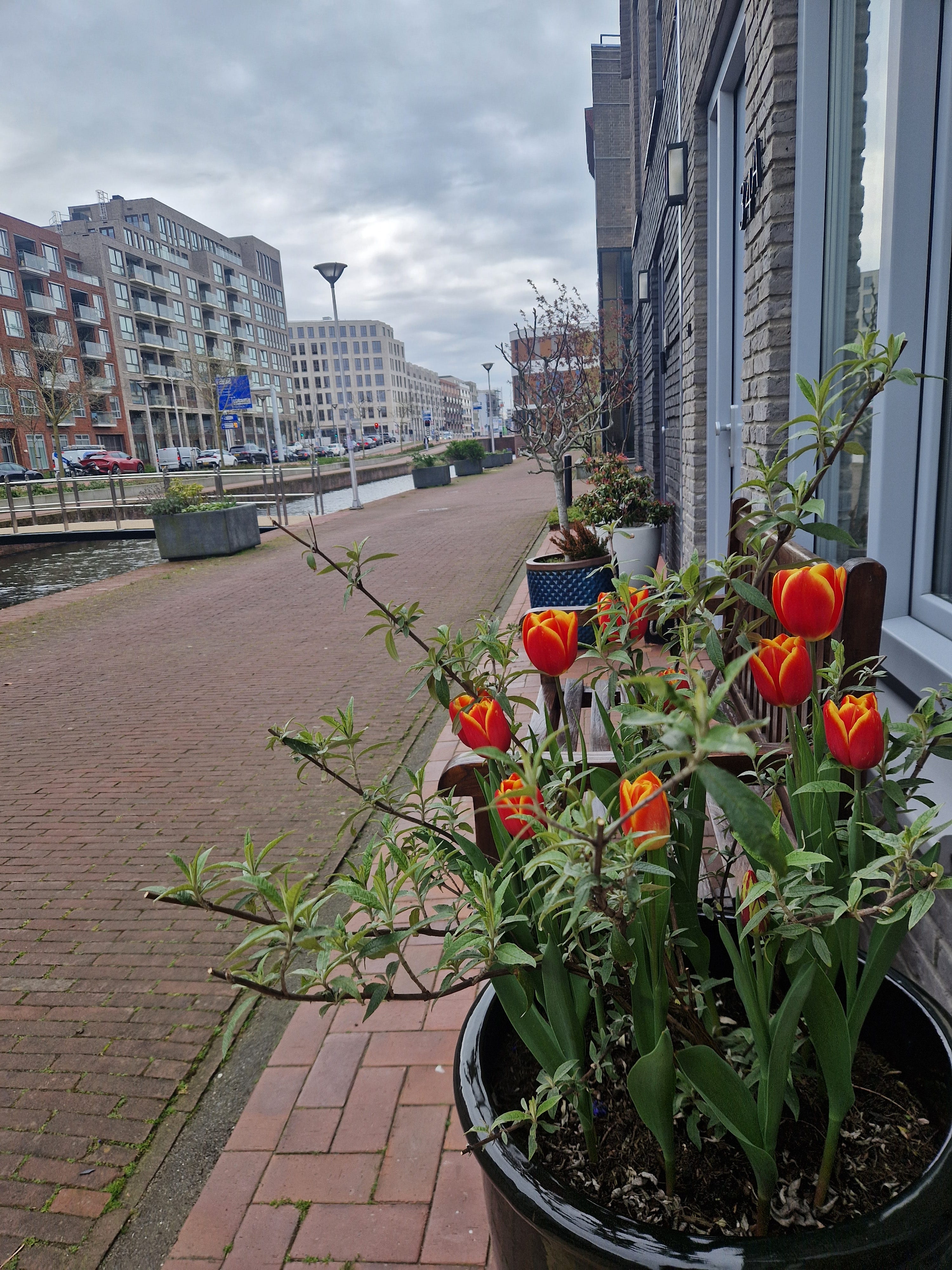
The wheel turns. It always has. Long before there were pews or collection plates, there was the Earth cracking open after months of cold, dark silence. The people who lived close enough to the ground to feel it, and were touching grass daily, noticed these signs. They celebrated. They understood, in their bones, that life returning was not a metaphor. It was a miracle. So they lit fires, danced, honoured the goddess of dawn and the fertile dark and the mystery of things that die and come back. They didn't need a story about suffering to explain the tulips. The tulips explained themselves.
Happy Ostara. Happy spring. Happy resurrection… in the oldest sense of the word.
Easter is fascinating.
We took a holiday about fertility and made it about a man's suffering. Classic.
Eggs. Bunnies. That's not church stuff. That's sex in the springtime. That's Gaia saying: “Alright, everybody wake up. Start blooming. Start procreating. Let's go!”
And somehow we turn that into …. no, no, no. This is about male suffering now.
Way before Christianity showed up, people were celebrating spring because after months of cold and death and nothing growing, the world came back. The ground opens, things bloom. Animals start reproducing, life returns. And a lot of those celebrations were tied to fertility. The earth, the female body, and moon cycles. Topics patriarchy is often uncomfortable with.
This is why Easter has a different date each year. It is aligned with the first Sunday after the first full moon after the spring equinox.
And then there’s Ostara 👑
Her name traces back to a Proto-Indo-European dawn goddess — tracked through Old English Ēostre and Old High German Ôstara, all siblings of the same ancient root. The word Easter itself is her name. She didn't get absorbed into the holiday, she IS the holiday. She just stopped getting the credit.
She shows up across cultures with different faces but the same energy. Scholars have weighed connections to the Slavic spring goddess Vesna and the Lithuanian Vasara. She was so closely associated with fertility that we derive the word oestrogen from her name.
Now. The hare 🐇
In Celtic and pagan traditions, hares were believed to be shapeshifters. Guides to the Otherworld, messengers of the divine, bridging the earthly and spiritual realms. Sacred. The kind of creature that doesn't fully belong to this world or the next, which made them the perfect companion for a goddess of the threshold. The one who stands at the edge of winter and tips it into spring.
The lore 📖
Ostara, goddess of dawn, is moving across the land when she finds a small bird collapsed in the snow with wings frozen, on the verge of death. She stops. And because she cannot restore what was lost, she transforms the bird into something that can survive the cold, a hare. In some versions, she grants the hare the ability to lay eggs once a year, a remnant of what it used to be. In gratitude, the hare decorates those eggs and offers them back to her.
That's where Easter eggs come from. Not a tomb. A goddess, kneeling in the cold, choosing not to walk past something small and suffering. An act of reimagining transformation. Taking something broken and giving it a different way to exist. If that isn't a resurrection story, I don't know what is.
The egg itself carried enormous meaning long before chocolate got involved. Revered across cultures as a symbol of the universe, the cycle of life, and the unseen forces of creation. The hare, meanwhile, was already ancient shorthand for fertility, the moon, and the feminine divine. Put them together under a dawn goddess associated with spring and you have a story so complete, so coherent, that it didn’t need improving.
The narrative shift
But then the church intervenes. And what do powerful systems with money do? They don’t always destroy what’s there. They just slap a new label on it.
So the eggs stay. The cute bunnies too. The whole life-is-bursting vibe stays. But the credit gets handed over to a man. Or, in a modern context, to whoever has the deepest pockets that controls a script.
And that's the pattern, isn't it? Women make life. The earth makes life. Spring makes life. And the institution says… actually, we'll take the credit thanks.
The fertility piece is older. The rhythm is older. And like so many periods in history, the feminine divine was edited and rescripted. But not well enough because the bunny's still pregnant.
So go find your eggs. Let the children run. Eat the chocolate, feel the sun. The goddess of dawn has been showing up longer than any institution has been telling her story, and she’ll be here long after.
Blessed Resurrection to all of you, again. xx
Audra
Love your pagan perspective, Audra. I always learn something new from your thoughtful pieces.